
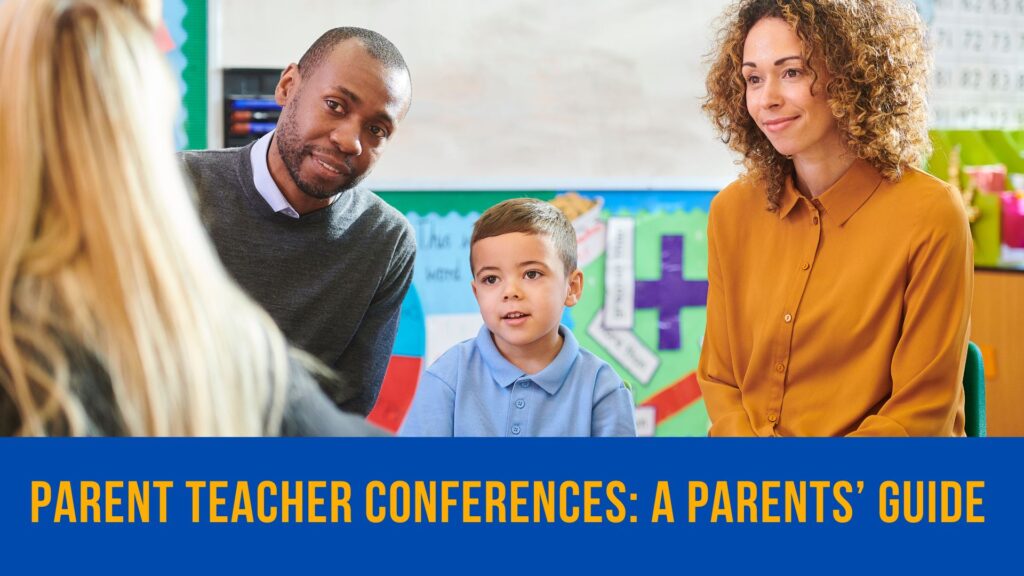
Parent–teacher conferences can bring up many emotions for parents of autistic and neurodivergent children. You may feel nervous, protective, or hopeful — often all at once. These meetings are a key opportunity to build a bridge between home and school, ensuring your child’s academic, social, and emotional needs are supported.
This isn’t just about grades or test scores. It’s about understanding how your child is learning, communicating, and experiencing their day.
🧠 Step 1: Come with an Open Mind and Heart
Your child’s teacher is their school expert — the one who observes them in the classroom, during transitions, on the playground, and in group activities. They can offer valuable insights into:
- How your child learns best
- How they interact with peers
- Where they may struggle or thrive socially and emotionally
At the same time, you are the expert on your child — their history, triggers, strengths, and needs. A strong partnership starts when both sides truly listen to one another. Try entering the conversation with curiosity, not just concern. Questions like “Can you tell me more about how they respond in group settings?” or “What do you notice during unstructured times?” open doors instead of building walls.
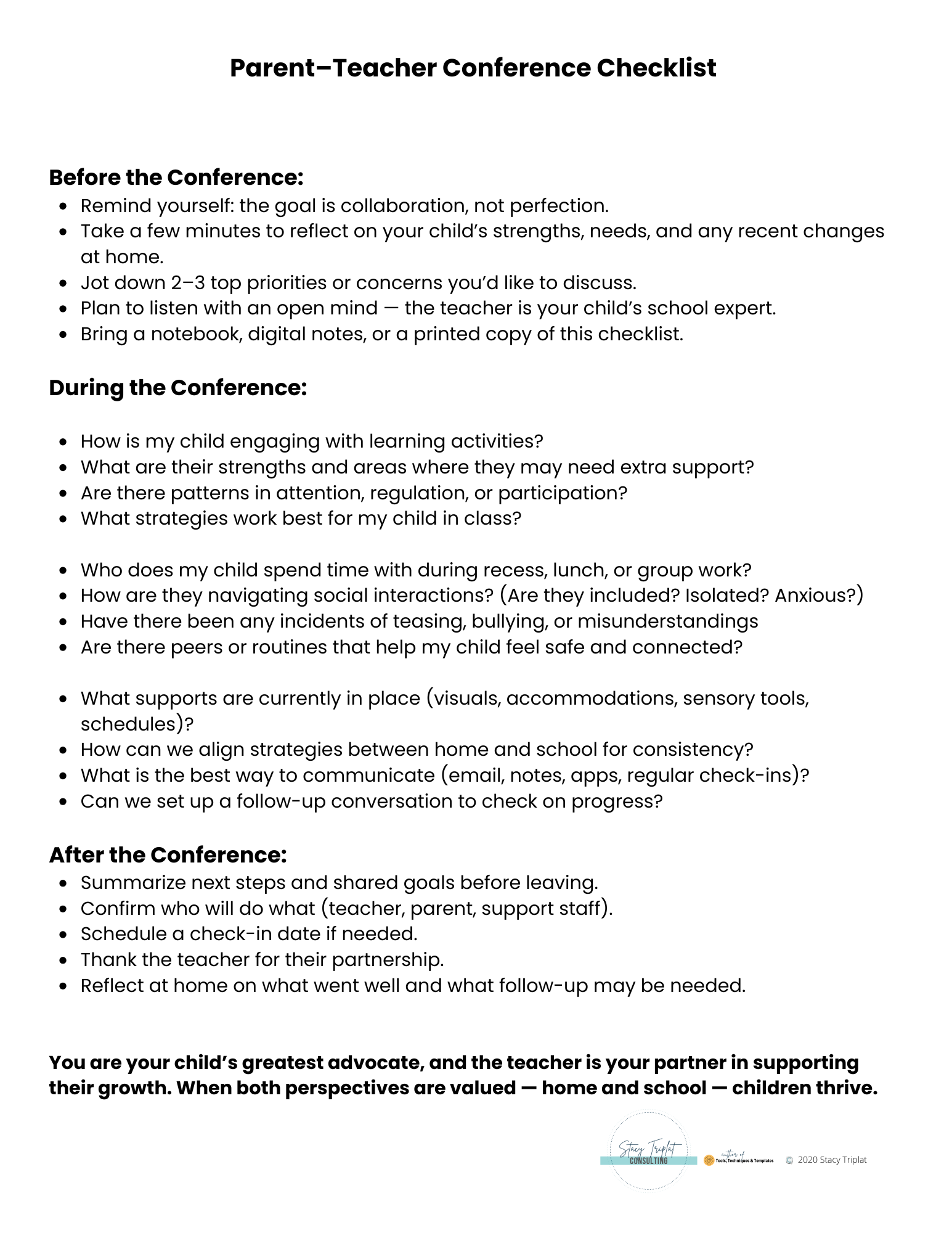
📝 Step 2: Prepare Key Questions Ahead of Time
It can be easy to get caught up in the flow of the conversation and leave without asking what’s most important. Bringing a short list of intentional, clear questions helps keep the meeting focused and meaningful.
Here are some questions you might bring to your conference:
- Academic and Emotional Learning
How is my child engaging with lessons and activities?
What are their strengths and areas that might need more support?
Are there patterns in their attention, regulation, or participation?
- Social Communication and Peer Interactions
Who does my child spend time with at recess, lunch, or free time?
Are there moments when they seem anxious, withdrawn, or overwhelmed?
Have there been any concerns with teasing, bullying, or misunderstandings with peers?
- Support and Collaboration
What strategies seem to help my child stay regulated and connected at school?
How can we support these strategies at home for consistency?
What communication system can we set up between home and school to stay aligned?
💬 Step 3: Be Ready to Listen, Reflect, and Share
Hearing about your child’s struggles can be hard — but it’s also information that empowers you to advocate with clarity.
You might hear things that surprise you, or even sting a little. That’s natural. Take a breath. Remember that feedback isn’t a judgment of your parenting — it’s a snapshot of how your child experiences the school environment.
Share your own observations: what works at home, how your child expresses stress, and what motivates them. Teachers appreciate concrete insights and strategies they can try in their classroom too.
🌱 Step 4: Leave with a Plan, Not Just Notes
The most meaningful conferences end with a clear path forward. This might include:
- A shared strategy to support your child’s emotional regulation.
- Plans to strengthen social connections.
- A communication loop between school and home.
- Setting up a follow-up check-in to revisit progress.
- Even small, practical steps can make a big difference when you work as a team.
You are your child’s strongest advocate, but you are not alone. Conferences are not just about problems to solve — they are about building understanding, trust, and partnership. By coming prepared, staying open, and focusing on connection, you help your child thrive both in and out of the classroom.
About the Author
Stacy Triplat, CCC-SLP
Educational Parent Coach | Autism Specialist | Creative Designer
Stacy Triplat helps families, educators, and neurodivergent children grow with clarity, care, and creativity through real-world strategies, affirming visuals, and empowering resources.
📞 651-775-2611
🌐 stacytriplat.com
🛍️ Visit My TPT Store
📘 Join Me on Facebook
🔗 Connect on LinkedIn